Thermal Mass Flow Meters: How Kurz Redefined Gas Measurement
Gas measurement is critical for industries ranging from power generation and refining to wastewater treatment and emissions monitoring. While many flow measurement methods exist, thermal mass flow technology stands out for its ability to directly measure mass flow without pressure or temperature compensation.
Kurz Instruments has not only refined this technology but also engineered solutions for some of the most difficult gas measurement applications—where other instruments fail.
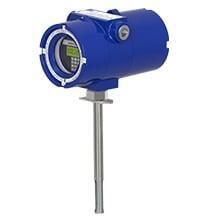
Thermal Mass Flow Measurement Fundamentals
Thermal mass flow meters measure the actual mass of a gas using the principle of convective heat transfer:
- A heated sensor element and a reference sensor are exposed to the gas stream.
- As gas molecules move past, they remove heat from the heated sensor.
- The amount of heat lost is proportional to the mass flow rate.
Unlike differential pressure or turbine meters, thermal mass flow meters:
- Do not require additional pressure/temperature transmitters for compensation.
- Provide direct mass flow readings in standard units (e.g., SCFM, Nm³/h).
- Handle a wide turndown ratio, capturing both very low and very high flows.
👉 Request a datasheet from Clipper Controls — Kurz Instruments' manufacturer's representative for California, Nevada, and Hawaii.
Why This Technology Matters
Industries adopt thermal mass flow for:
- Energy management: Monitoring natural gas and compressed air consumption.
- Environmental compliance: Measuring flare, vent, and stack gases to meet EPA and greenhouse gas reporting standards.
- Process optimization: Controlling aeration in wastewater or combustion in boilers.
- Cost reduction: Identifying leaks or inefficiencies in gas systems.
How Kurz Redefined Gas Measurement
1. High-Velocity Measurement
Kurz pioneered sensors capable of measuring gas flows at extremely high velocities, often seen in stacks, ducts, and flare applications. While many thermal meters max out, Kurz instruments remain accurate and stable, ensuring compliance in challenging environments.
2. Real-World Calibration
Each Kurz meter is calibrated with actual gas flows under realistic operating conditions. Competing meters often rely on theoretical models or air-only calibration, which can introduce errors. Kurz’s approach delivers true accuracy across a broad range of gases.
3. Contamination Resistance: Precision Measurement for Dirty or Wet Gas
Kurz flow elements are engineered with designs that resist fouling and maintain accuracy in dirty or wet gas streams—critical for applications like landfill gas, digester gas, and wastewater aeration.
4. Rapid Response Electronics
Kurz electronics provide fast response times, which is essential for processes with fluctuating gas flows, such as combustion control and flare monitoring.
5. Rugged Reliability
Built for industrial conditions, Kurz flow meters withstand vibration, moisture, and extreme temperatures. This ruggedness ensures long service life and reduces maintenance downtime.
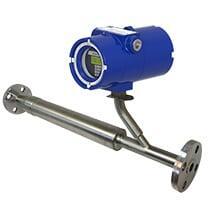
👉 Want to learn how thermal mass flow technology can improve your operations? Contact Clipper Controls for expert guidance on selecting the right Kurz solution.
Applications Where Kurz Excels
Combustion Optimization
Kurz meters help operators fine-tune combustion efficiency in boilers, furnaces, and turbines—maximizing energy efficiency and reducing emissions.
Emissions & Environmental Compliance
Measuring stack gas, flare gas, and greenhouse gas emissions accurately is non-negotiable. Kurz delivers reliable data for regulatory reporting.
Wastewater Aeration Systems
Aeration is one of the most energy-intensive processes in treatment plants. Kurz meters enable precise airflow control, cutting power consumption while maintaining effluent quality.
Industrial Energy Management
From natural gas usage tracking to compressed air monitoring, Kurz meters provide the data needed to reduce waste and improve cost efficiency.
👉 Implement best practices with confidence—get expert field support for installation from Clipper Controls.


 Toll Free
