Types of Temperature Switches and Their Role in Process Safety
👉 Contact Clipper Controls to specify industrial temperature switches from trusted manufacturers like SOR Controls Group and Moore Industries.
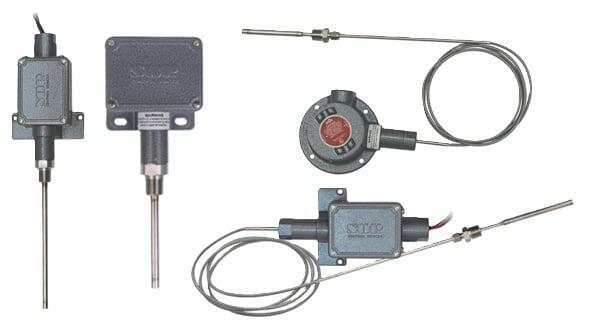
Mechanical Temperature Switches
- Bimetallic temperature switches – use two metals with different expansion rates bonded together. As temperature changes, the strip bends, actuating the switch.
- Gas-filled bulb temperature switches – rely on the expansion and contraction of a sealed gas to move a diaphragm or bellows, triggering the switch.
Advantages of Mechanical Temperature Switches
- Rugged simplicity – minimal electronic components mean fewer failure points.
- Field-proven reliability – withstand harsh environments, vibration, and extreme temperatures.
- Ease of use – straightforward installation and operation without complex programming.
Mechanical Temperature Switches from SOR Controls Group
SOR Controls Group exemplifies the strengths of mechanical temperature switches, offering designs trusted in demanding industries such as oil & gas, chemical processing, and power generation. Their rugged construction and precise actuation make them a go-to choice for engineers who prioritize safety and dependability in challenging environments.
👉 Discover rugged mechanical switch solutions from SOR Controls Group, offered through Clipper Controls.
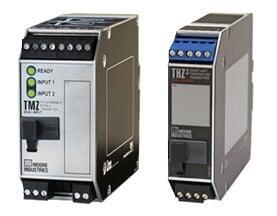
Electronic Temperature Switches
Advantages of Electronic Temperature Switches
Electronic switches deliver several key benefits, including:
High accuracy and repeatability – digital sensing reduces drift and ensures precise actuation points.
Programmable setpoints – users can configure switching thresholds to match exact process needs.
Advanced features – such as alarms, diagnostic functions, and communication outputs for integration into control systems.
Flexibility in integration – easily tied into modern automation and safety platforms.
These advantages make electronic switches ideal where tight process control, data visibility, and system integration are priorities.
Electronic Temperature Switches by Moore Industries
Moore Industries leads the way in intelligent electronic switch solutions. Their advanced devices combine digital sensing with configurable outputs, enabling engineers to implement precise, application-specific control strategies. By offering integration with modern control systems, Moore Industries switches help improve efficiency, enhance process safety, and support smarter industrial operations.
👉 Explore Moore Industries’ intelligent switch solutions through Clipper Controls to enhance your process safety and efficiency.
Choosing the Right Technology
Reliability vs Flexibility
Selecting the Right Temperature Switch
The right choice depends on factors such as:
Operating environment – Is the system exposed to vibration, dust, or extreme temperatures?
Process safety needs – Does the application require advanced alarms, diagnostics, or integration into control systems?
Maintenance strategy – Is a simple, low-maintenance device preferred, or does the facility benefit from the insights of digital monitoring?
Cost vs long-term value – Mechanical switches typically have lower upfront costs, while electronic switches may reduce downtime and improve control efficiency over time.
By weighing these considerations, engineers and maintenance teams can confidently select the type of switch that delivers the best balance of performance, reliability, and safety for their process environment.
👉 Find the right temperature switch for your application with expert guidance from Clipper Controls.
How Industrial Temperature Switches Improve Process Safety
Industrial temperature switches play a critical role in protecting equipment, personnel, and processes across a wide range of industries. By providing reliable actuation at defined thresholds, they act as first-line safeguards that prevent dangerous conditions before they escalate.
In many facilities, temperature switches are part of a layered safety system, complementing sensors, transmitters, and control logic. Unlike continuous monitoring devices, which require interpretation by control systems, switches deliver a direct, decisive action—such as tripping a relay or shutting down a pump. This immediate response capability is vital in preventing accidents, especially in critical applications where even a few seconds of overheating can cause severe equipment damage or safety hazards.
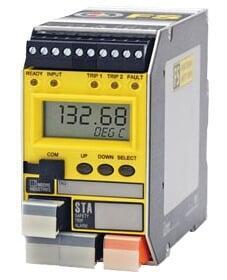
Some key ways industrial temperature switches enhance safety include:
Equipment protection – Prevent overheating in pumps, compressors, turbines, and motors.
Process integrity – Maintain safe operating ranges in boilers, furnaces, and heat exchangers to avoid process disruptions.
Alarm and shutdown systems – Trigger emergency responses, such as alarms or automatic shutdowns, when unsafe temperature levels are reached.
Regulatory compliance – Ensure processes remain within mandated temperature limits for safety and environmental standards.
When integrated into control systems, temperature switches provide actionable signals that can shut down equipment, activate backup systems, or alert operators in real time. This ability to detect, respond, and protect makes them an essential component of industrial process safety strategies.
👉 Enhance your process safety with trusted temperature switch solutions from Clipper Controls.




 Toll Free
