Skip to searchSkip to main content

​Differential Pressure Transmitters

Reliable Flow, Level, and Filter Monitoring for Demanding Processes

Differential pressure (DP) transmitters remain a workhorse of modern plants because they convert small pressure differences into dependable signals you can use for flow, level, and filter health. Whether you’re managing water filtration, boiler draft, slurry transfer, or chemical storage, DP delivers stable, repeatable measurements that help improve uptime, efficiency, and safety. Beyond the fundamentals, modern DP platforms offer tighter total error over temperature, broader turndown, and digital access to diagnostics—so you can commission faster, spot issues earlier, and keep assets on spec. From harsh outdoor installs to sanitary or corrosive service with remote seals, a properly selected DP transmitter provides the simple, scalable backbone for reliable process control today and room to grow tomorrow.

👉 Schedule a consultation with Clipper Controls to evaluate DP options for your application.

Contact us for application assistance!
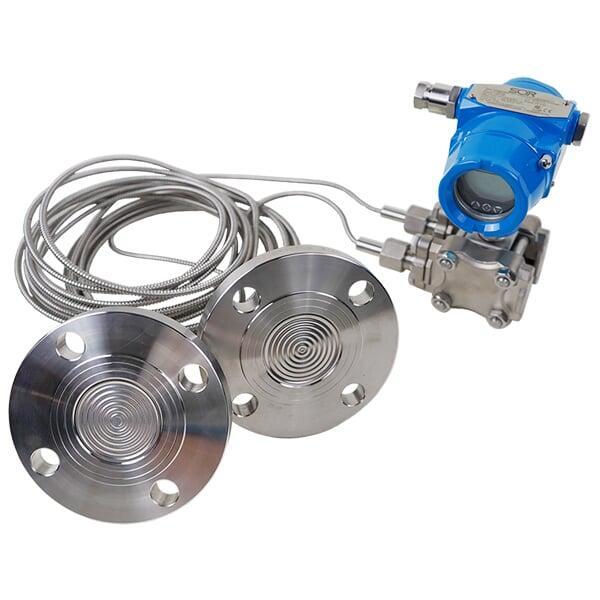
Differential Pressure Transmitter With Dual Remote Diaphragm Seals.

​Why Differential Pressure Matters

Many instruments promise “set‑and‑forget,” but few match DP’s combination of robustness, rangeability, and lifecycle value. A DP transmitter compares a high‑pressure (HP) and low‑pressure (LP) port and outputs a signal proportional to ΔP. In practice, that becomes:
  • Flow with an orifice, venturi, nozzle, or wedge (Q ∝ √ΔP)
  • Level using hydrostatic head (ρ·g·h), including closed tanks where LP references vapor space
  • Filter condition by trending ΔP across housings, membranes, or baghouses
Across industries, DP helps reduce downtime, avoid overfills or run‑dry conditions, and keep processes within compliance limits.
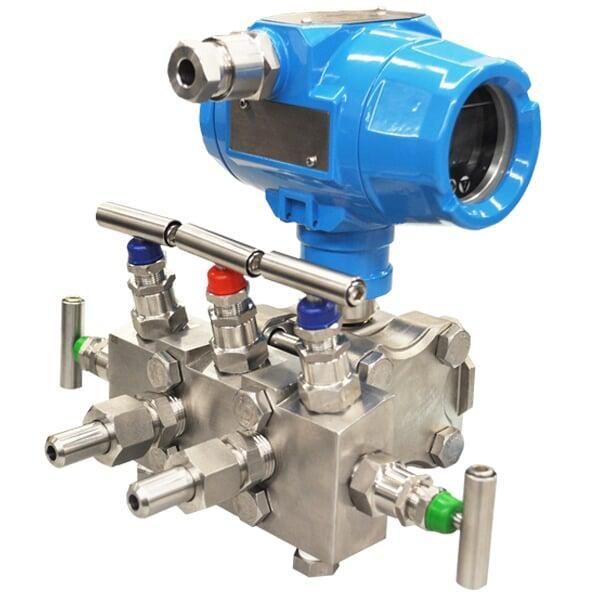
Differential Pressure Transmitter With Integral 5-Valve Manifold

​Wet‑to‑Wet vs. Wet‑to‑Dry

Choosing the right configuration ensures accuracy and reliability.

Wet‑to‑wet (liquids): Ideal across heat exchangers, strainers, membranes, and slurry lines. Select compatible materials (e.g., 316/316L; alloys where needed) and consider remote diaphragm seals for hot, viscous, or fouling media.

Wet‑to‑dry (gases/air): For HVAC filters, scrubbers, baghouses, and boiler draft. Prioritize low‑range stability (inches w.c.), temperature compensation, and moisture management. Short, symmetric tubing helps maintain signal quality.
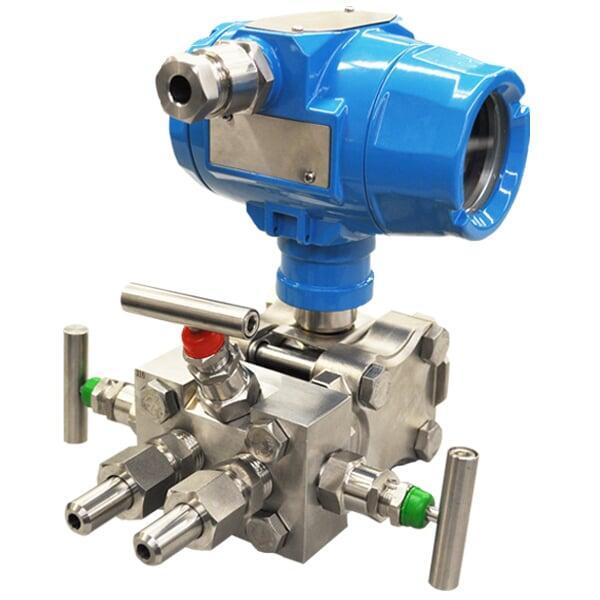
Differential Pressure Transmitter With Integral 3-Valve Manifold

​Where Plants Use DP

Flow: Pair the transmitter with an orifice, venturi, wedge, or nozzle. Maintain adequate straight‑run or use a flow conditioner when space is tight.

Level: For vented tanks, vent the LP side; for closed tanks, connect LP to vapor space. If specific gravity varies, compensate in your control system.

Filter health: Rising ΔP indicates loading. Trending helps set clean/dirty thresholds, cut energy use, and prevent breakthrough.

👉 Talk with Clipper Controls about integrating DP into existing pressure and flow programs: (844) 880-2469

​Smart and Connected DP Transmitters

Today’s DP transmitters support HART® and Modbus to speed commissioning and improve diagnostics. Keep the familiar 4–20 mA loop while gaining digital access to ranges (LRV/URV), tags/descriptor, damping, square-root, sensor temperature, and device status/alarms—or use Modbus RTU/TCP for efficient multi-drop networks and SCADA polling. Features like HART burst mode, standardized EDDL/DTM device files, and revision-controlled templates make setups repeatable, while Modbus gives straightforward register mapping for PV, ΔP, temperature, and health bits.

Clipper Controls can supply prebuilt host templates, register maps, and recommended polling/baud settings, plus guidance on addressing, byte order, and basic OT hygiene (write-locks after SAT, unique tags, VLAN segmentation) so your team gets value on day one—without rewiring existing analog infrastructure.

Request technical information about HART/Modbus integration.
Smart Differential Pressure Transmitter

​Choosing the Right DP Transmitter

Your process drives the choice. We help you balance:
  • ΔP span & static rating to cover operating and upset conditions
  • Wetted materials & remote seals for chemistry, temperature, and solids
  • Accuracy and stability across real ambient/process temperatures
  • Output, enclosure, and approvals to match site standards
  • Response time & damping to handle pulsation without slowing your loop.
  • Manifold/impulse line configuration for safe proving, clean startup, and long-term reliability.
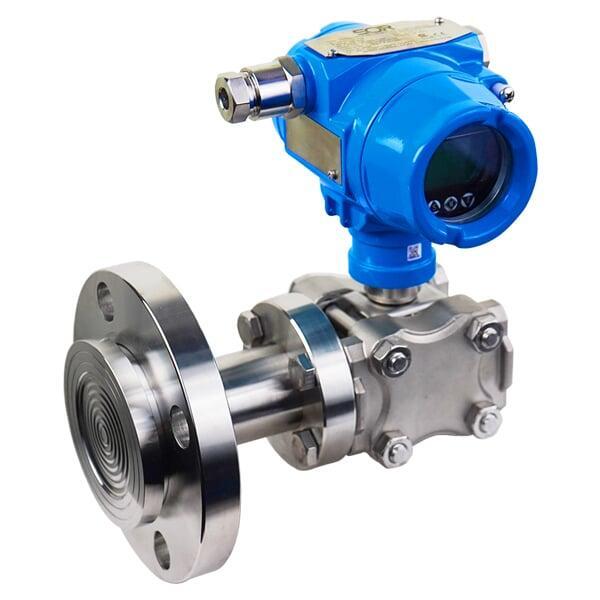
Request a personalized specification matched to your ranges, units, and primary elements.
Differential Pressure Transmitter With Direct Mount Seal

Spotlight: SOR Differential Pressure Transmitters
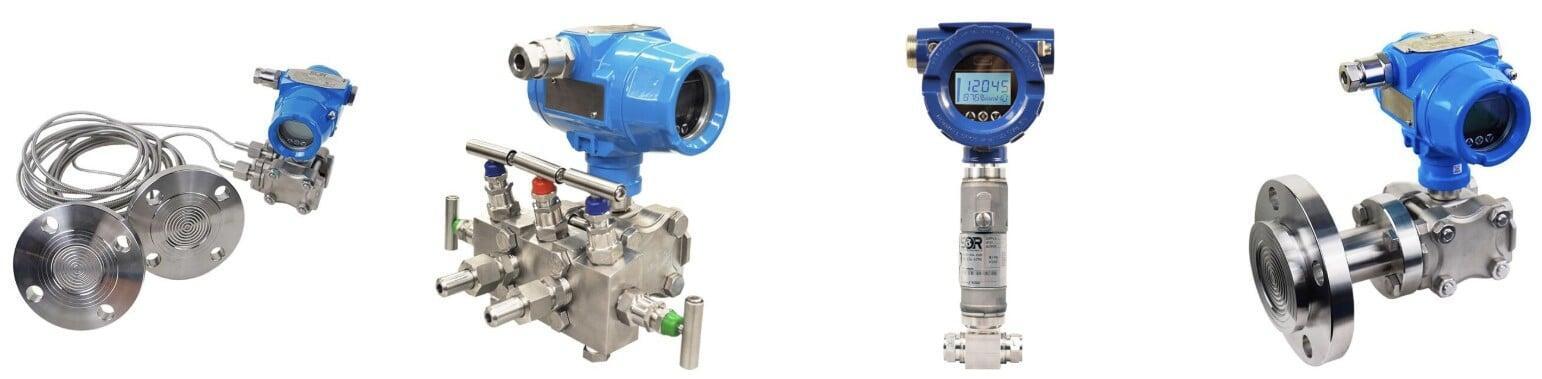
SOR builds rugged DP transmitters engineered for outdoor and abrasive/caustic duty. Plants value their tight total error, long‑term stability, broad turndown, and hazardous‑area approvals. Options include remote seals, abrasion‑resistant diaphragms, overpressure protection, and local indication.
Differential Pressure Transmitters
Differential Pressure Transmitters by SOR Controls Group

👉 Get detailed product specifications: request a datasheet for SOR Differential Pressure Transmitters.

​Work with Clipper Controls

From application sizing and material/seal selection to pre‑configured ranges/tags, startup support, and calibration programs, Clipper Controls delivers DP solutions that align with your standards and schedule.

Send us a message to review your process and goals, we're happy to help!

Serving California, Nevada, and Hawaii.

Clipper Controls Logo
SOR Controls Group Logo