Skip to searchSkip to main content

​CNG Custody Transfer Tracking & Data Management

When you move compressed natural gas (CNG) from one owner to another, every standard cubic foot is revenue. CNG custody transfer is not just about putting a “high-accuracy” CNG meter in the line—it’s about proving, day after day, that your numbers are right.

This application note explains how Clipper Controls helps design CNG custody transfer metering systems that combine:
  • Custody-grade CNG flow measurement
  • Proper pressure and temperature compensation
  • Robust flow conditioning
  • PLC/HMI-based tracking and batching
  • Clean signal handoff to SCADA and business systems

So you get a measurement and data trail that commercial teams, auditors, and regulators can trust.

👉  Talk to a CNG custody transfer specialist about your metering run, tracking requirements, and audit-ready data trail.
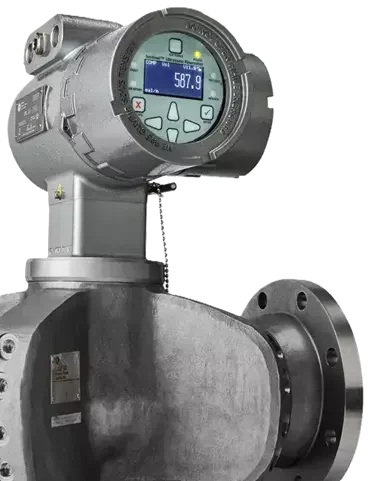
Panametrics Sentinel custody-transfer ultrasonic flowmeter used as the primary CNG metering device
Panametrics Sentinel multipath ultrasonic CNG meter delivers custody-transfer accuracy with rich diagnostics.

​Where CNG custody transfer happens

CNG custody transfer typically occurs when:
  • CNG is transferred from producers to midstream operators
  • CNG is loaded into trailers or tube skids for over-the-road delivery
  • CNG is delivered to industrial end users or satellite stations

In each case, you need more than a CNG meter:
  • Accurate primary measurement of CNG flow, pressure, and temperature
  • Consistent, documented corrections to standard conditions
  • Traceable totals that match invoices and contracts
  • Signal ownership and integrity when multiple stakeholders rely on the same measurements

Clipper Controls helps you design this entire chain—not just select a meter from a catalog.

​Why CNG projects are moving from turbine to ultrasonic

In many new-build gas custody-transfer applications, especially on larger lines, multipath ultrasonic meters are increasingly selected over turbine meters because they deliver:
  • No moving parts – no turbine blades to wear, foul, or stick
  • Low pressure drop – preserving valuable pressure across the metering run
  • Deep diagnostics – multipath data provides insight into profile, fouling, and meter health

Turbine meters remain widely used—particularly in legacy metering runs and smaller lines—but when you’re designing a new CNG custody transfer metering system, multipath ultrasonic technology often becomes the preferred choice for long-term reliability and defensible accuracy. In some projects, particularly where existing standards or site preferences favor differential-pressure metering, a venturi tube with DP and temperature measurement may be selected instead of, or alongside, ultrasonic metering.

This shift matters when buyers, sellers, or auditors question your data. Better diagnostics and fewer mechanical failure modes make it easier to show exactly how your CNG custody transfer numbers were produced.

​Measurement layer: CNG custody transfer starts at the meter run

The foundation of any CNG custody transfer tracking and data management strategy is a properly engineered meter run. Depending on your metering philosophy, this may be a multipath ultrasonic CNG meter or a venturi tube with differential pressure and temperature measurement. Clipper Controls supports you from specification through startup.

Custody-grade CNG flow measurement – Panametrics Sentinel

For many new-build custody-grade gas applications, Panametrics Sentinel multipath ultrasonic flowmeters are the centerpiece of the CNG metering run:
  • Multipath ultrasonic measurement for high-accuracy CNG flow
  • Averaging of the velocity profile to handle real-world piping effects
  • Built-in diagnostics to monitor signal strength, profile asymmetry, and meter health
  • Digital outputs and communications for easy integration with PLCs and flow computers
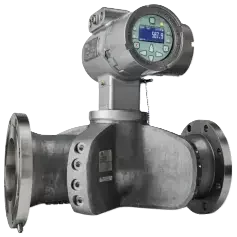
For CNG custody transfer, Panametrics Sentinel gives you the accuracy and diagnostic depth needed to defend your numbers when contracts, audits, or disputes arise.
Natural gas custody-transfer pipeline measurement with Panametrics Sentinel ultrasonic flow measurement.

Custody-grade CNG flow measurement – Wyatt Engineering Venturi + SOR + Moore Industries

In some CNG custody-transfer projects—especially where plant standards favor differential-pressure (DP) metering or where you are upgrading an existing DP run—a Wyatt Engineering venturi tube with SOR Controls Group transmitters and Moore Industries temperature instrumentation provides a robust alternative to ultrasonic metering.
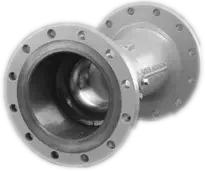
Wyatt Engineering venturi flow tube used as the primary differential-pressure element in a CNG custody-transfer meter run.
A Wyatt Engineering venturi tube gives you:
  • A proven, fully mechanical primary element with no moving parts
  • Low permanent pressure loss compared to many other DP devices
  • Stable, predictable discharge coefficients for CNG custody-transfer calculations
  • A well-defined meter run that can be sized and documented to recognized engineering practices

Paired with the right transmitters, the venturi approach becomes a custody-grade CNG metering solution:
  • SOR Controls Group differential pressure transmitter across the venturi to measure DP proportional to flow
  • SOR line pressure transmitter for static pressure compensation and over-pressure monitoring
  • Moore Industries temperature transmitter (head-mount or rail-mount) to bring process temperature into the custody-transfer calculation
  • Optional Moore Industries signal conditioning to isolate, split, or convert signals for fiscal vs. operations paths

In the Toshiba PLC or flow computer, these signals are combined using the venturi sizing data to calculate:
  • Standard-volume CNG flow (SCFH/SCFM) based on DP, pressure, temperature, and gas properties
  • Running and batch totals that align with custody-transfer contracts and invoice units
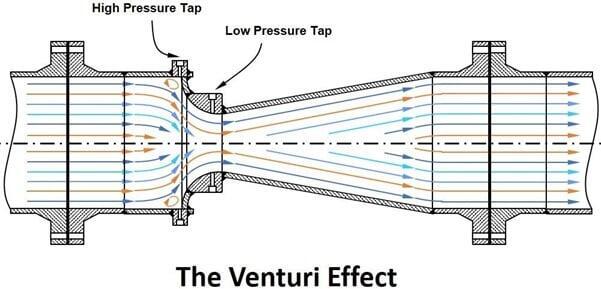
Illustration and diagram of a venturi flow meter showing high and low pressure taps and the Venturi effect used to calculate CNG flow from differential pressure.

This venturi-based approach is especially attractive when:

  • You want to reuse existing DP-based engineering standards or metering practices
  • Low pressure drop is important, but a full ultrasonic meter is not required or practical
  • You prefer a primary element that is mechanically simple and easy to document for auditors and regulators

Supporting gas measurement – Kurz Instruments

Kurz Instruments adds options where mass-based gas tracking or non-custody measurements are needed around your CNG system, such as:

  • Mass flow monitoring on compressor discharge or suction lines
  • Internal performance tracking for blowers, heaters, or process gas lines
  • CNG load tracking where thermal mass is an acceptable technology
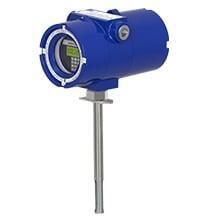
Kurz instruments aren’t always the primary custody-transfer meter, but they can play a key role in the surrounding CNG flow measurement and efficiency story.
Kurz insertion thermal mass flow meter for monitoring natural gas flow in custody-transfer and support systems.

Pressure, temperature, and auxiliary signals

Even the best CNG custody transfer flowmeter needs supporting instrumentation:

  • Pressure transmitters for line pressure, over-pressure protection, and compensation
  • Temperature transmitters to correct CNG volume to standard conditions
  • Valve status and run/bypass feedback so you know exactly how the metering run was configured when totals were recorded
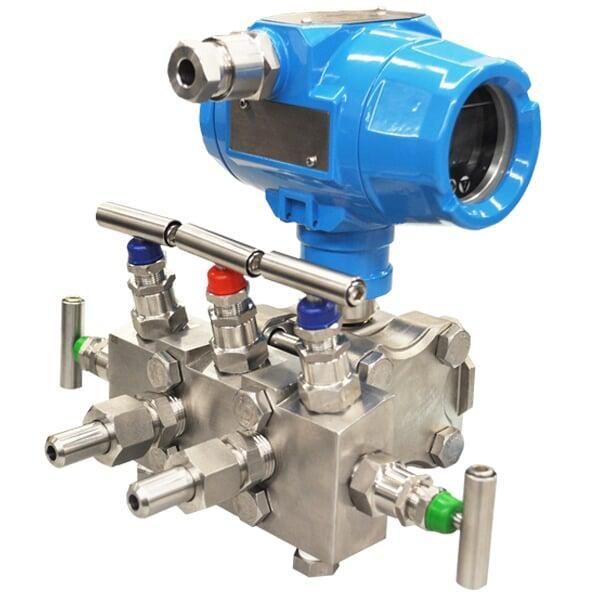
Clipper Controls helps you select transmitters and auxiliary devices that match process conditions and contract requirements.
Differential pressure transmitter with integral 5-valve manifold for measuring venturi DP and auxiliary pressure signals in a CNG custody-transfer meter run.

​Flow conditioning: getting the profile right

For custody transfer, you are effectively buying a meter + piping system, not just a meter.

  • Flow Optimizers flow conditioning hardware helps:
  • Create a stable, repeatable velocity profile at the meter
  • Reduce the impact of elbows, tees, reducers, and other upstream disturbances
  • Keep the meter operating within its published accuracy in a real-world layout
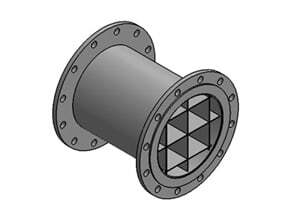

This is especially important for multipath ultrasonic CNG flowmeters, which can use diagnostic data to confirm that the profile is within expected limits.
Flow Optimizers flow straightener for custody-transfer service.

​Control & tracking layer: turning signals into trusted totals

Once the CNG custody transfer meter run is in place, the next step is turning measurements into traceable totals and presenting them in a way that operators, accounting, and customers can all understand.

Toshiba PLCs & HMIs – the local custody-transfer engine

Toshiba PLC and HMI platforms provide the on-skid or local control layer for CNG custody transfer tracking:
  • Collect flow, pressure, and temperature signals from the meter run
  • Execute contract-specific logic:
    • Batch totals per trailer, tube skid, or delivery point
    • Shift- or day-based closing totals
    • Contract-specific rounding, thresholds, or alarms
  • Present intuitive HMI screens for:
    • Active transfers and historical batches
    • Running totals and alarm conditions
    • Operator notes or reason codes (e.g., meter bypassed, calibration in progress)

The same PLC/HMI layer can securely transfer validated totals to:
  • Plant SCADA
  • Data historians
  • Customer or enterprise systems used for billing and reconciliation
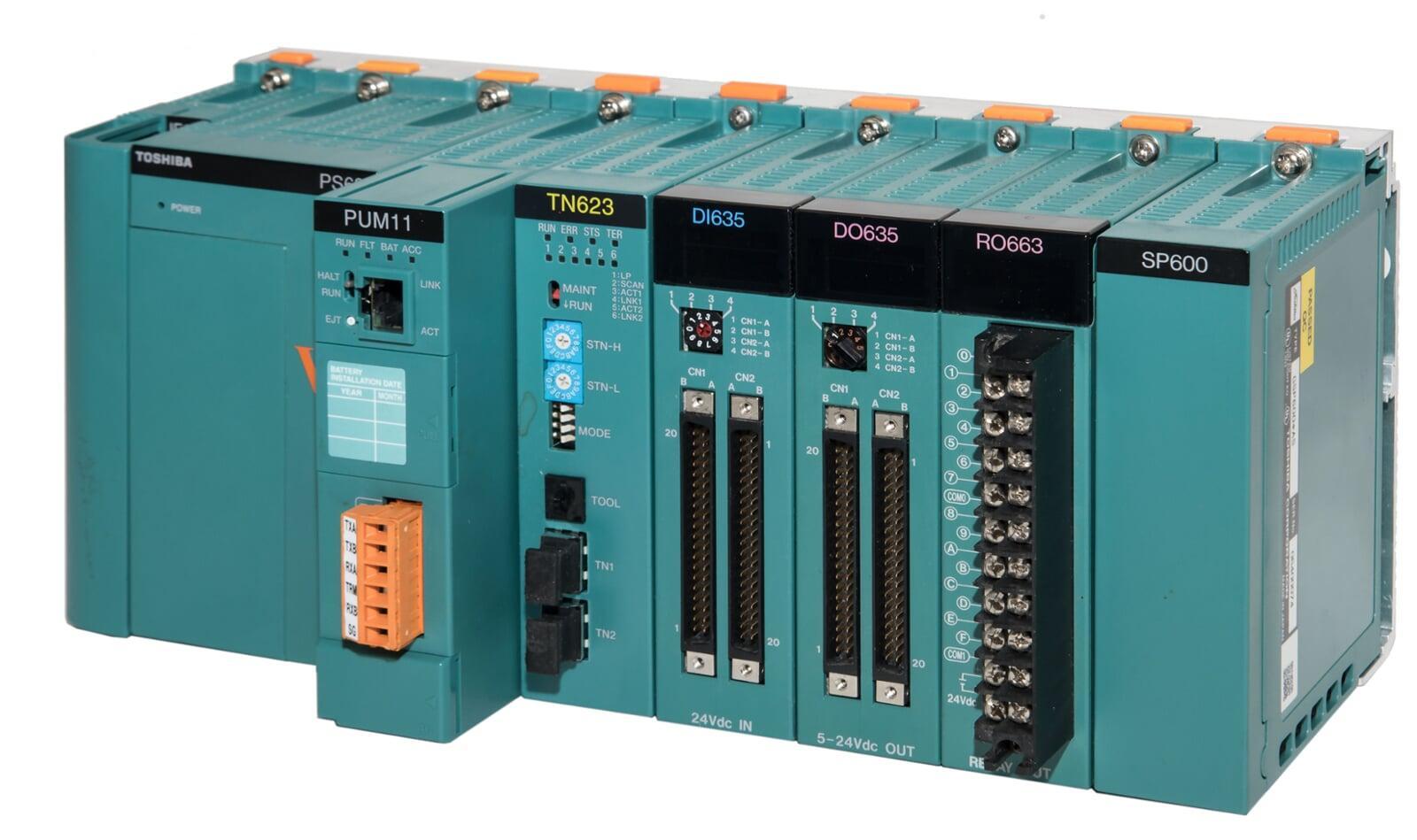
You’re not locked into a proprietary enterprise platform—the Toshiba layer focuses on reliable custody-transfer logic and clean data handoff.
Toshiba rack-mounted PLC with I/O modules used as the local control and batching engine for CNG custody-transfer systems.
Toshiba's Programmable Logic Controller (PLC) offered by Clipper Controls
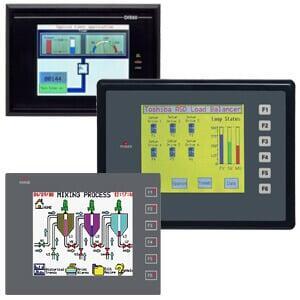
Toshiba touch-screen HMIs displaying process graphics and control screens for local CNG custody-transfer batching and monitoring.
Toshiba Human Machine Interface (HMI) Displays offered by Clipper Controls

​Signal integrity & clean splits: Moore Industries

In many CNG custody-transfer installations, more than one group needs access to the same signals. Operations, accounting, and third-party auditors may all look at the same flow, pressure, and temperature data.

Moore Industries interface hardware is used to maintain signal integrity while serving all of them:
  • Signal isolators and splitters provide multiple isolated copies of custody-transfer signals
  • Separation between:
    • The “fiscal” signal path used for custody transfer, reporting, and billing
    • The “operations” path used for control loops, alarms, and optimization
  • Safety-rated I/O where SIL or functional-safety requirements apply
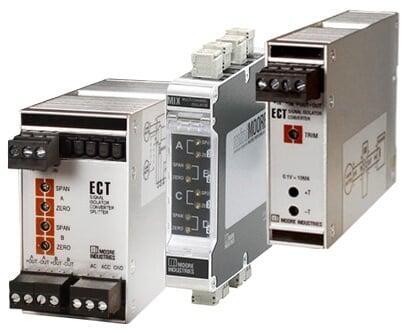
This approach helps protect the integrity of your CNG custody transfer metering data—even when the operations side is evolving, tuning, or adding new loads.
Moore Industries DIN-rail signal isolators and splitters providing isolated, duplicated 4–20 mA signals for CNG custody-transfer metering and control systems.

​What to define in your CNG custody-transfer project

To get a clean design and accurate budget for a CNG custody transfer tracking and data management solution, it helps to define a few key elements up front:

  1. Process conditions

    • Line size, pressure, and temperature range

    • Gas composition and contaminants (moisture, particulates, etc.)

    • Normal, minimum, and peak flow rates; required turndown

  2. Metering philosophy

    • New build vs. upgrade of a legacy turbine run

    • Preference for multipath ultrasonic vs. turbine or other technologies

    • Required uncertainty and applicable standards or contract language

  3. Control and tracking requirements

    • Number of accounts, contracts, trailers, or delivery points to track

    • Batch-based vs. continuous custody transfer

    • Local vs. remote operator interfaces and acknowledgment needs

  4. Data handoff and reporting

    • Which systems must receive custody-transfer totals (SCADA, historian, ERP, customer systems)

    • Cybersecurity and isolation requirements between domains

    • Required reports (daily closes, batch tickets, monthly summaries, audit trails)

Clipper Controls can help translate these requirements into a practical combination of Panametrics, Wyatt Engineering, SOR Controls Group, Kurz, Flow Optimizers, Toshiba, and Moore Industries products that fit your actual field layout and project constraints.

​Work with a CNG custody transfer specialist

If you’re planning a new CNG custody transfer metering system or modernizing an older turbine-based run, Clipper Controls can help you:
  • Evaluate ultrasonic vs. turbine options for your CNG service
  • Design meter runs with the right flow conditioning and diagnostics
  • Specify PLC/HMI logic for batches, contracts, and audit-ready totals
  • Integrate custody-transfer data cleanly into your existing control and business systems

Clipper Controls technical specialist assisting customers with CNG custody transfer solutions

👉 Ready to improve your CNG custody transfer tracking and data management?

Contact Clipper Controls or call (844) 880-2469 to discuss your application with a specialist.
Panametrics Logo
Toshiba Logo
Kurz Instruments Logo
Moore Industries Logo
Wyatt Engineering Logo
SOR Controls Group Logo

​Frequently Asked Questions

What is CNG custody transfer and why does it matter?

CNG custody transfer is the point where ownership of compressed natural gas passes from one party to another and every standard cubic foot is tied to revenue. Accurate custody-transfer systems help prevent disputes, support contracts and audits, and ensure that buyers and sellers have confidence in the measured quantity of gas.

Where does CNG custody transfer typically occur?

CNG custody transfer typically occurs when gas moves from producers to midstream operators, when CNG is loaded into tube trailers or skids for over-the-road delivery, and when trailers or skids are unloaded at satellite or industrial stations. Each of these handoff points requires custody-grade metering and tracking.

What measurement technologies can Clipper Controls use for CNG custody transfer?

Clipper Controls can design CNG custody-transfer systems around Panametrics Sentinel multipath ultrasonic flowmeters or a Wyatt Engineering venturi tube combined with SOR differential and line pressure transmitters and a Moore Industries temperature measurement. Both approaches provide custody-grade measurement with proper pressure, temperature, and flow conditioning.

How does Clipper Controls track and report CNG custody-transfer data?

Tracking and reporting are handled through Toshiba PLCs and touch-screen HMIs that collect signals from the custody-transfer meter run, apply batching and totals, and generate trailer-based and batch-based records. These systems can hand off validated totals to SCADA, historians, and business systems for billing, reconciliation, and audits.

How can I get help specifying a CNG custody-transfer metering system?

You can work directly with a CNG custody-transfer specialist at Clipper Controls. Share your pipeline conditions, trailer or station configuration, required standards, and data tracking requirements, and the team can recommend a complete system including flow meter, flow conditioning, transmitters, PLC/HMI logic, and signal isolation and handoff.