Dew Point Meter: Precision Moisture Measurement for Industrial Applications
👉 Ready to enhance your moisture measurement program?
Contact Clipper Controls at (844) 880-2469 or message us to connect with an instrumentation expert.
What Is a Dew Point Meter and Why It Matters
Types of Dew Point Meters for Industrial Use
Portable Dew Point Meters
A portable dew point meter is used for quick field checks, system validation, or maintenance inspections. Compact and battery-powered, these tools are ideal for verifying dryer performance or troubleshooting high-moisture conditions.
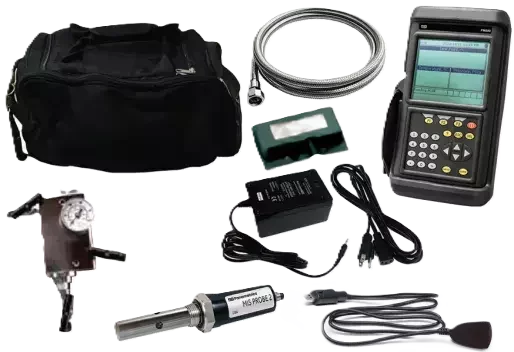
Panametrics PM880
Portable dew point meter for spot checks, audits, commissioning, and field troubleshooting.
- Portable, single-channel dew point meter
- Reads dew point, ppmv, ppmw, %RH, lb/MMSCF
- Standard range: +10 to -80 °C, with data to -110 °C
- Accuracy: ±2 °C above -100 °C
- IP67 / Type 4X enclosure
- Data logging: 100,000+ points
Inline Dew Point Meters
An inline dew point meter provides continuous, automated monitoring directly within a process line. Integrated with plant control systems, they enable real-time adjustments to air dryers, compressors, or desiccant systems.
Trace Moisture Dew Point Meters
When extremely low moisture levels must be detected—such as in semiconductor gas lines, natural gas dehydration, or high-purity nitrogen—trace moisture dew point meters deliver ppm-level precision.
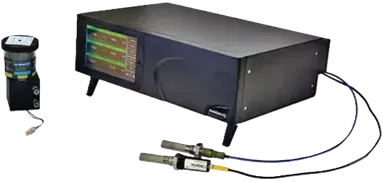
OEM Dew Point Sensing Solutions
OEM dew point sensors are compact, integrable components designed for original equipment manufacturers. These sensors offer compact footprints, Modbus/HART outputs, and stable AlOx sensors simplify OEM integration in dryers, compressors, and skid systems.
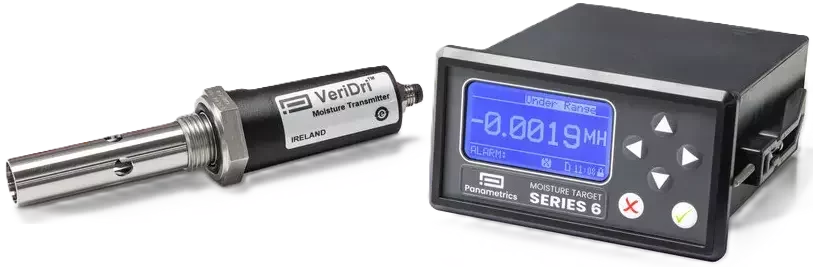
How to Choose the Right Dew Point Meter
1. Measurement Range and Accuracy
2. Process Conditions
Account for pressure, flow rate, and temperature. Some processes involve corrosive gases or high-pressure systems requiring specialized sensors.
3. Connectivity and Outputs
Ensure compatibility with your existing control system. Many dew point meters support analog, HART, or Modbus outputs for automated data collection and remote monitoring.
4. Calibration and Maintenance
Regular dew point meter calibration ensures accuracy. Instruments that allow field or factory calibration, combined with proper filtration, reduce sensor drift and contamination.
5. Partner with Experts
Panametrics dew point meters, available through Clipper Controls, combine proven sensor technology with rugged design and long-term reliability. Clipper Controls’ engineering team helps match the right model to your exact process needs.
👉 Ready to improve your moisture measurement program?
Best Practices for Dew Point Meter Installation and Calibration
- Choose a Representative Sampling Point – Install at locations reflecting actual process conditions. Avoid stagnant gas zones or temperature gradients.
- Keep the Gas Stream Clean – Use filtration to remove oil and particulates that can contaminate sensors.
- Schedule Regular Calibration – Verify accuracy with traceable standards or Clipper Controls’ dew point sensor calibration services.
- Verify Readings Periodically – Cross-check inline dew point meters with portable units to identify drift early.
- Troubleshoot Proactively – High dew point readings may indicate saturated dryers, blocked lines, or leaks introducing humid air.
Industrial Applications for Dew Point Meters
- Compressed Air Systems: Continuous inline monitoring downstream of dryers prevents condensation and corrosion.
- Natural Gas Dehydration: Trace-moisture verification to meet pipeline specs.
- Plastic Drying and Extrusion: Control resin dryness to prevent defects and improve product quality.
- Pharmaceutical and Biotech: Stabilize humidity in lyophilization and cleanroom processes.
- Power Generation and Utilities: Maintain dry instrument air for reliable valve and control performance.
- Food and Beverage Packaging: Monitor nitrogen or CO₂ dew point during packaging to extend shelf life.
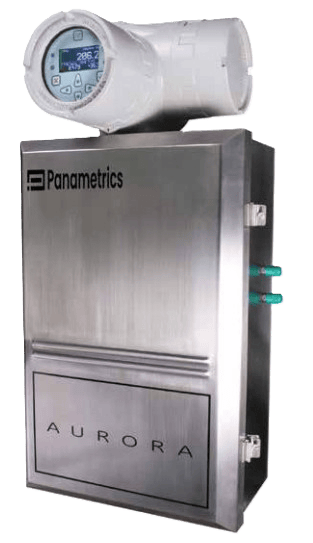
Partnering with Clipper Controls for Dew Point and Moisture Measurement
- Application engineering and system design support
- Calibration and maintenance programs
- Field integration and technical consultation


👉 We support projects across California, Nevada, and Hawaii with local engineering, calibration, and field integration.

 Toll Free
